

Ukraine finds itself at a dead end, not only geopolitical but also military. More and more analysts argue that the Ukrainians are facing a massive problem: they do not possess the appropriate weapons and the required quantities to intercept Russia's mass air strikes with the new advanced Geran drones and Iskander ballistic missiles. This is a realization that causes immense concern and awakens a real nightmare for Kyiv, which sees itself completely defenseless against Russian weapons ahead of a winter that could prove decisively critical for the next day, not only of the war, but of Ukraine itself.
No answer to the Gerans
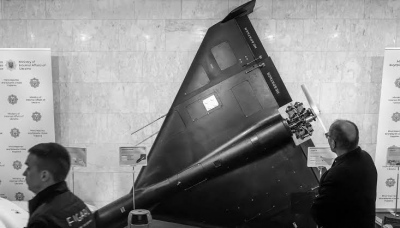
Leading Western media have already pointed out that Ukraine is essentially helpless against the new generation of engine-powered Russian Geran drones. A recent Reuters report stated that Russia increased production of its most modern jet-powered drones, which reach speeds of up to 500 kilometers per hour, at a time when the Ukrainian Armed Forces lack the means to intercept them. As reported, the increase in available systems allows Russia to launch more massive attacks, making it difficult for Ukrainian air defense not only to intercept the drones themselves, but also to manage its available ammunition reserves. Strikingly, last June Russia launched around 450 jet-powered Gerans, while in August this number reached… 2,850. If these figures reflect the actual evolution of production, the change is significant: Ukrainian air defense is no longer facing isolated raids, but a threat that can be repeated on a large scale and with high frequency.
Speed and numbers change the equation
The difficulty lies not only in the performance of each individual Geran. For any air defense system, the number of simultaneous targets is a critical factor. A dense wave of drones can force the defending side to activate different means of interception, consume large quantities of ammunition, and disperse available air defense units across a larger number of potential targets. Under these conditions, the new Geran versions, due to their speed, maneuverability, and accuracy, are considered particularly difficult targets for available Ukrainian assets, a fact that allows Russia to utilize them for strikes on critical energy infrastructure. The pressure becomes even greater when drone raids are combined with ballistic missiles.
The Iskanders and the difficult interception problem
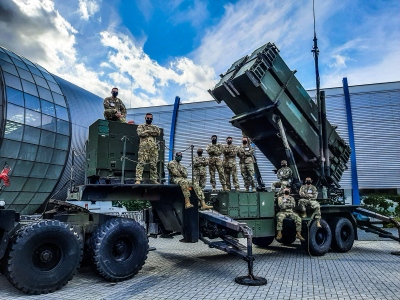
Even more serious is the threat posed by Iskander-M operational-tactical ballistic missiles. The main difficulty for Ukraine is that not all air defense systems provided to it by the West have the capability to intercept ballistic targets. Specifically, the Norwegian NASAMS and German IRIS-T systems provided by the West cannot engage ballistic targets, while ammunition stocks for Soviet-era S-300s have long been exhausted with no way to replenish them. In practice, only American Patriot systems equipped with PAC-3 and PAC-3MSE guided anti-aircraft missiles can shoot down Iskander missiles.
The problem is not just the Patriots, but their missiles
The presence of a Patriot battery alone does not solve the problem. Every interception requires ammunition, and PAC-3s are expensive, complex missiles that cannot be produced in unlimited quantities. According to data, the US defense industry can currently produce about 650 missiles per year, though plans exist to increase production. Even a significant increase, however, requires new facilities, expansion of production lines, and time. The second problem is that Ukraine is not the sole user of the Patriot. Missiles for the Patriot are needed not only by Ukraine, but also by 16 other countries that possess the system, including the US military. Washington obviously does not wish to finance Ukrainian air defense at the expense of its own defensive capability. Therefore, Kyiv cannot rely on large-scale missile deliveries from across the Atlantic. It is left hoping for its European allies.
The cost of each interception
The financial dimension is equally significant. The cost of a single PAC-3 is estimated at around $4 million, while more than one interceptor missile may be used for a single ballistic target. By this logic, even aid packages worth hundreds of millions of dollars can translate into just a few dozen interceptors. For example, funding of £100 million is estimated to correspond to roughly 35 PAC-3 missiles. If two missiles are used per incoming ballistic target, the interception window narrows quickly, essentially covering only 17 Iskander missiles. This is perhaps the most important element of today's equation: Ukrainian air defense must use very expensive and relatively rare ammunition against a Russian campaign of missile and drone attacks that could repeat for months.
Europe searches for available stocks
The shortage of interceptors has mobilized European countries, which are attempting either to finance new purchases or deliver ammunition from their own stockpiles. Germany has already delivered five Patriot batteries and about 400 missiles to Ukraine, while Berlin has announced additional deliveries from Bundeswehr stocks. The quantities were not disclosed, but it is unlikely to involve a large number of missiles. At the same time, Berlin can hardly expect to have priority for new anti-aircraft missile deliveries from the US. Trump's cool stance toward "old Europe" is no longer a secret. As for Britain, it clearly does not wish to deliver missiles to Kyiv from its own reserves. Following Iranian ballistic missile and drone strikes on British military bases in the Indian Ocean and Cyprus, the government prioritized rearming its own air defense forces.
Symbolic assistance
Besides Britain and Germany, other NATO countries undertook commitments to strengthen Ukrainian air defense. Specifically, after the 36th meeting of the "Ramstein" group, Poland announced a new military aid package worth 50 million euros. This amount is sufficient for 14 anti-aircraft missiles, which can at best shoot down seven Iskanders. This is symbolic assistance, considering that in recent weeks dozens of such missiles have been launched against Ukraine. Norway promised more, committing to allocate $200 million for the purchase of anti-aircraft missiles for Ukraine — about 50 missiles. Furthermore, Latvia and Finland decided to purchase an unspecified number of interceptor missiles. However, they are not among the richest NATO countries that can afford the purchase of large quantities of such expensive weaponry. Thus, in the immediate future, Kyiv can at best count on a few dozen missiles. Indeed, even these programs do not immediately alter the fundamental problem: available stockpiles are finite, and increasing production cannot happen overnight.
Thousands of missiles requested, hundreds produced
Ukrainian Defense Minister Yevgeny Khmara states that the country wants, with funding from an EU loan, to purchase about 1,000 guided anti-aircraft missiles. He did not clarify, however, over how long a timeframe such a deal could be completed. According to estimates in the annual edition of The Military Balance, there are currently about 4,000 to 5,000 anti-aircraft missiles for Patriot of all versions globally. Of these, the PAC-3 and PAC-3MSE, which can be used against ballistic targets, total just 2,300 to 2,500 units. Thus, the US defense industry simply cannot keep up with Kyiv's demands. And these demands are growing due to the difficult situation on the ground.
The combination of Geran and ballistic missiles
For Kyiv, the hardest scenario is not a single category of Russian weapon, but their combined strike. Gerans can be used en masse to saturate or distract air defenses. Ballistic missiles, on the other hand, require high-capability systems and valuable interceptor missiles. In a complex raid, Ukrainian command is thus forced to decide which assets to use against each threat, which targets must be protected as a priority, and how many interceptors it can deploy without depleting its stocks. This exact arithmetic appears to be one of the most significant problems facing Ukrainian air defense.
A dark winter
In Ukraine, there are serious concerns that with the onset of the heating season, Russia will attempt to "knock out" the energy system with ballistic missiles, as happened last winter. Back then, the majority of power generation facilities in the Kyiv region came under attack. Patriots were used intensively, but failed to protect all facilities. Now, however, the Ukrainians lack sufficient ammunition to continue firing. Russian analysts describe this situation as a "window of opportunity" for Russia and argue that it should exploit it to inflict maximum possible damage on Ukrainian infrastructure.
The capture of Orekhov
At the same time on the front line, the Russian army continues unabated. On September 14, Russian war correspondents reported the capture of Orekhov. Now the first details have emerged, along with essentially the answer as to why the Russian Ministry of Defense still remains silent. "In the south, the 'Dnepr' Group of Forces is working wonders. Nobody expected that it could single-handedly break through the extremely strong fortified complex of Orekhov," said Russian military analyst Dmitry Degtyaryov, creator of the Telegram channel Генеральный штаб. In Degtyaryov's assessment, there was some haste in the announcements regarding the full capture of the city: "Over the past 24 hours, cartographers mapped that the Zavodskoy district came under our firm control. High School No. 1, which constituted a strong stronghold of the Armed Forces of Ukraine in that sector, was also captured, as well as the Orekhovskaya railway station and the high-rise buildings behind the railway lines."
Chaotic Ukrainian movements
However, there are certain nuances here. As the Russian expert noted, he had reported the capture of these sectors several days prior, citing fighters from the group. Cartographers, however, only "colored" these areas after a large number of objective control images were published. Where, then, did the announcements regarding the capture originate? The explanation given is simple: • the Armed Forces of Ukraine no longer possess full and stable control of the city; the entire defense is limited to piecemeal and chaotic movements of fighters in the northern outskirts, many of whom are trying to escape — according to the text, 80–90% of them "stay there forever," • the opponent still controls certain strongholds, • the logistics of the Ukrainian forces have been completely destroyed — full fire control has been imposed on the main Zaporizhia–Orekhov road axis, partly thanks to the capture of Novopavlovka. The road itself lies beyond a river, preventing retreating forces from crossing the natural obstacle. The same applies to the Novonikolaevka–Orekhov road.
Resupply only via drones
The only remaining resupply route for the Ukrainian army is via heavy rotorcraft drones, which are shot down by Russian soldiers. In Degtyaryov's assessment, an official announcement from the Ministry of Defense may come in about a week. However, as he reminds, there is something that is often overlooked: "After capturing a city, in any case, some time is still needed, as is usually the case, for clearing operations. It is not enough simply to bring Orekhov under control; it must then be held completely securely so that a situation like Kupyansk is not repeated, where, as you recall, the flanks were not secured and ultimately it was not possible to maintain full control of the city." To achieve this, it is not enough merely to check every basement; the flanks must also be secured, essentially transforming the city partly into a rear area. At the same time, Russian forces will likely continue their offensive from Orekhov once logistics are organized. Often, these two processes occur in parallel.
A terrible surprise
Advances were also recorded in the Volchansk sector, where Russian forces completely surrounded the Ukrainians and extended beyond it. Shevchenkovo, Shirokoye, and Olkhovatka were captured. "In general, inside the pocket, our forces are currently conducting an operation to divide it into smaller segments, because with the forces available to us here, it is impossible to 'swallow' such a huge pocket whole. Therefore, from the border side, we are moving toward Malaya Volchya to isolate and neutralize the northern part separately. From the Chernyakov side, we are moving south toward Komissarovo to do the same with the eastern part. As for the central part of the pocket, as they say, it can wait," stated Degtyaryov.
Around 2,000 dead, a large number of casualties
Earlier it had been reported that relatively few fighters, roughly a few hundred, might be inside the pocket. However, data from recent days speaks of 1,500–2,000 soldiers. At the same time, an unexpectedly high number of dead is reported. A few days ago, there was mention of 305 dead and about 30 prisoners. In fact, most losses occur not in active battles, but in attempts to break out of the encirclement. Ukrainian forces attempt daily to exit the ring, hoping to slip between Russian positions and escape. However, most are struck by drone operators.
Preparing a counteroffensive
According to Russian paratroopers, creators of the Telegram channel "Архангел спецназа," the Ukrainian army is preparing as covertly as possible for a counteroffensive, as occurred near Liman: "Active transfer of the unmanned systems battalion of the 23rd Separate Assault Regiment of the National Guard from Kharkiv to the Veliky Burluk area is recorded to provide fire support to units on the Novoaleksandrovka–Prikolotnoye line. Units of the 2nd Special Forces group of the 6th Special Operations Center have also been identified on the contact line in the Prikolotnoye area for reconnaissance and special operations, which will likely conduct raids against our positions." Given the increased Ukrainian activity in the Liman direction, an intensification of Ukrainian attacks can be expected in the Burluk sector as well, where an extremely unfavorable situation is developing for Ukrainian forces.
Pressure on Liman
As noted by Russian analyst and retired colonel Aslan Nakhushev, 85% to 90% of mobilized reinforcements over the past month have been directed exclusively to the forces of Ukrainian commanders Biletsky and Prokopenko, who, in turn, send these soldiers to only two sectors: Dobropolye and Liman. On average, according to his calculations, this amounts to up to 17,000 men for each. "The outcome of the war will be decided in other directions. What the final outcome will be is, in general terms, already clear." The situation itself near Liman remains, however, very difficult. In Degtyaryov's assessment, over four months of continuous attacks, the forces of Group "West" lost up to 300–350 square kilometers. According to OSINT analyst "Пролив Сталина," territorial losses amounted to 200 square kilometers in September alone. Despite this, the defense holds.
Preventing a repeat of the Kupyansk tragedy
In certain sectors, offensive actions are still possible. "The opponent is indeed carrying out an operation that so far has been quite successful for them, aimed at holding back our forces, as well as launching counterattacks. Yes, in some places the opponent is even attempting a direct breakthrough. The situation, in principle, is not yet critical. We can hold back the opponent, we are stabilizing the front, and we continue to destroy their approach routes used for force rotation and ammunition transport with the help of UAVs. <…> Nevertheless, of course, our leadership will need to pay attention to the situation near Krasny Liman… so that the tragedy of Kupyansk is not repeated here," stated military analyst and DNR reserve officer Alexander Matyushin.
www.bankingnews.gr






Σχόλια αναγνωστών